IFRS 17VFAAILearning
Someone Asked Me How VFA Works, So I Turned It Into a Game

5 min read
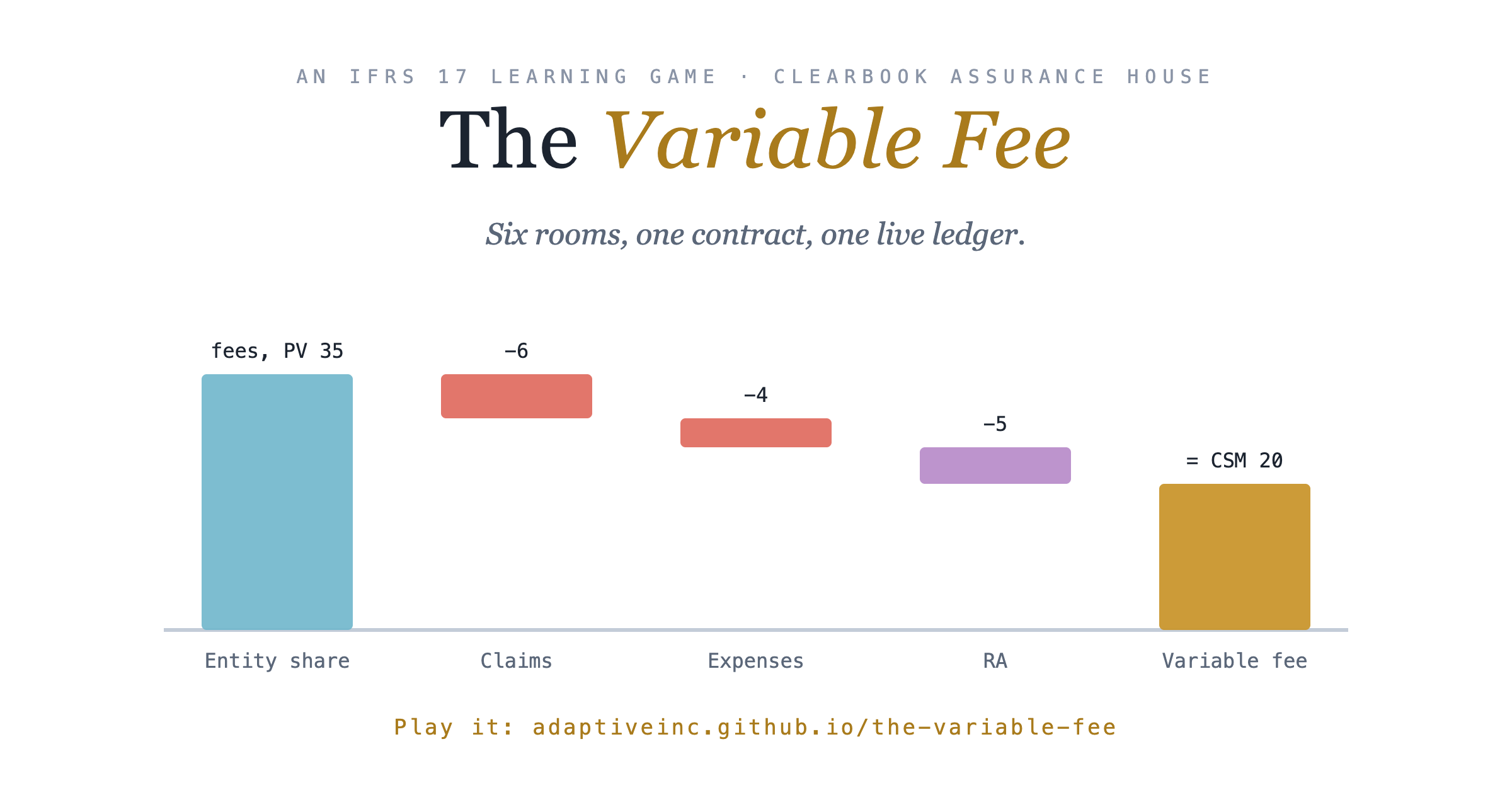
Someone recently asked me how the Variable Fee Approach works under IFRS 17.
To answer the question, I immediately went back to the standard. I read through the relevant paragraphs and tried to piece everything together into a clear explanation. Although I could explain each part separately, it was much harder to show how they interact.
There is plenty of IFRS 17 material online, but most of it is designed as reference material. It explains the requirements without necessarily helping the reader see how the mechanism works in practice.
I began to wonder whether I could create something people could operate instead of another document they had to read.
Around this time, I found Laurentiu Raducu's article about using AI to learn semiconductor manufacturing. He built ChipTycoon, a small game in which the player operates a semiconductor factory.
What interested me was the change in perspective. Instead of reading about the factory, you make decisions and see how those decisions affect each stage of the process.
The accompanying Hacker News discussion also raised an important concern: if AI helps create the learning material, how do we know the material is correct?
That question is particularly important when the subject is accounting.
I called my game The Variable Fee: An IFRS 17 Learning Game.
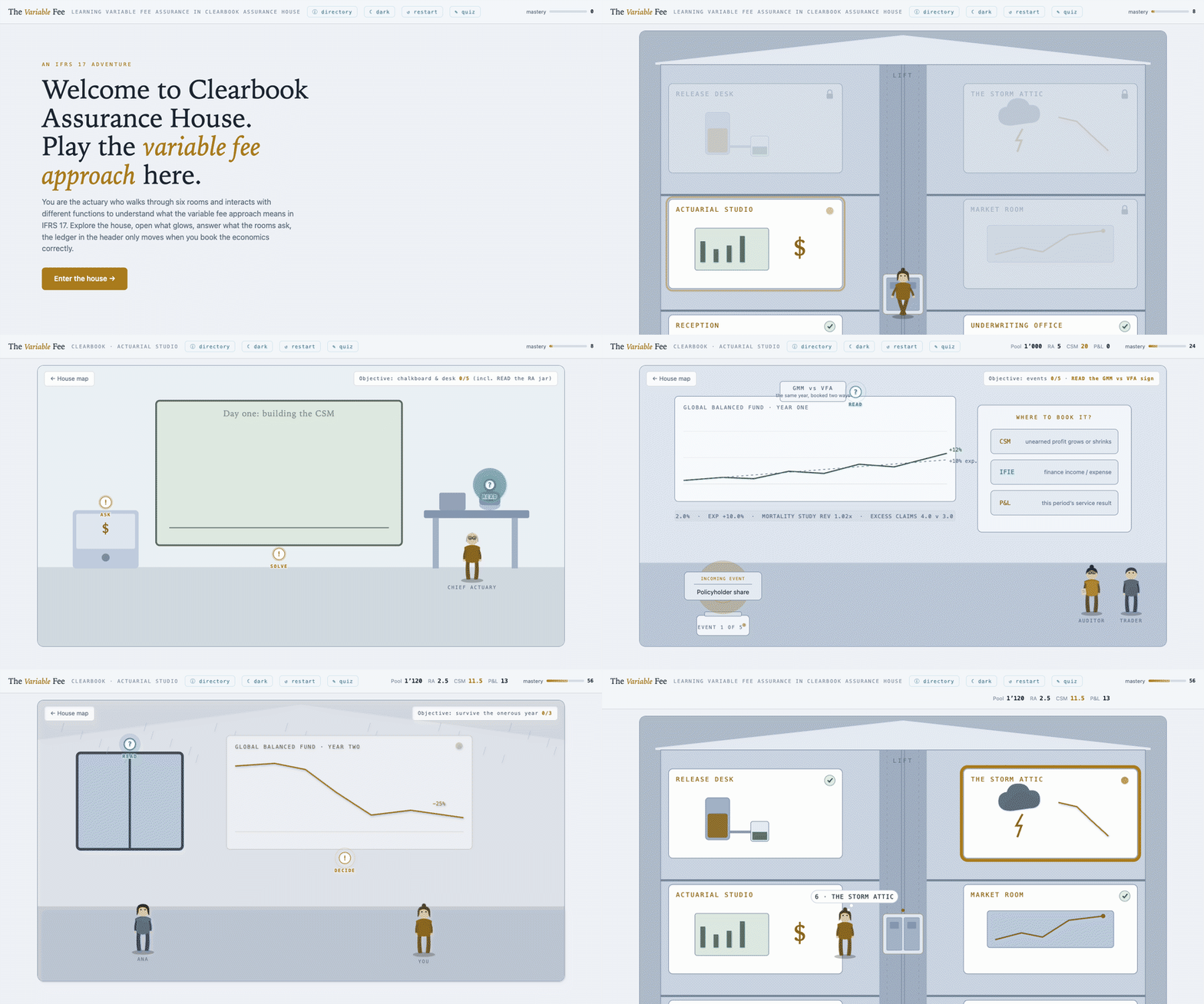
The player travels through a house, with each room representing a stage in the accounting. One participating contract and its ledger follow the player from classification through initial measurement, market movements, CSM release and an onerous-contract scenario.
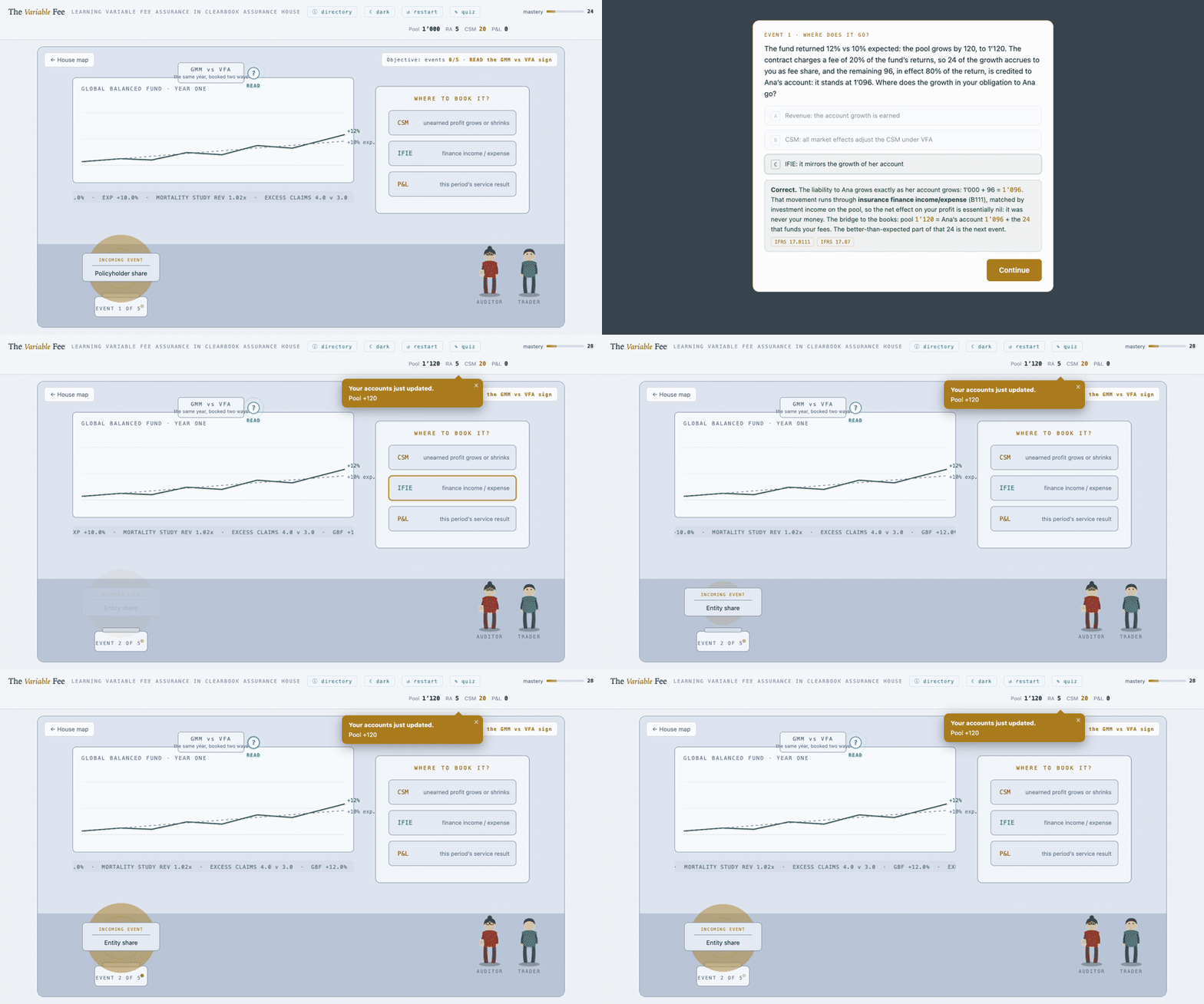
The player has to make a decision before seeing the explanation. Rather than asking for the definition of the CSM, for example, the game asks where a particular change should be recognised and then shows the effect on the ledger.
The aim was not to make IFRS 17 look simple. It was to make the relationships between its requirements easier to see.
In one simplified scenario, the group has a CSM of 11.5. An adverse change relating to future service amounts to 18.5.
The CSM absorbs 11.5 and falls to zero. Because it cannot become negative, the remaining 7.0 is recognised as a loss, with a loss component established for the group.
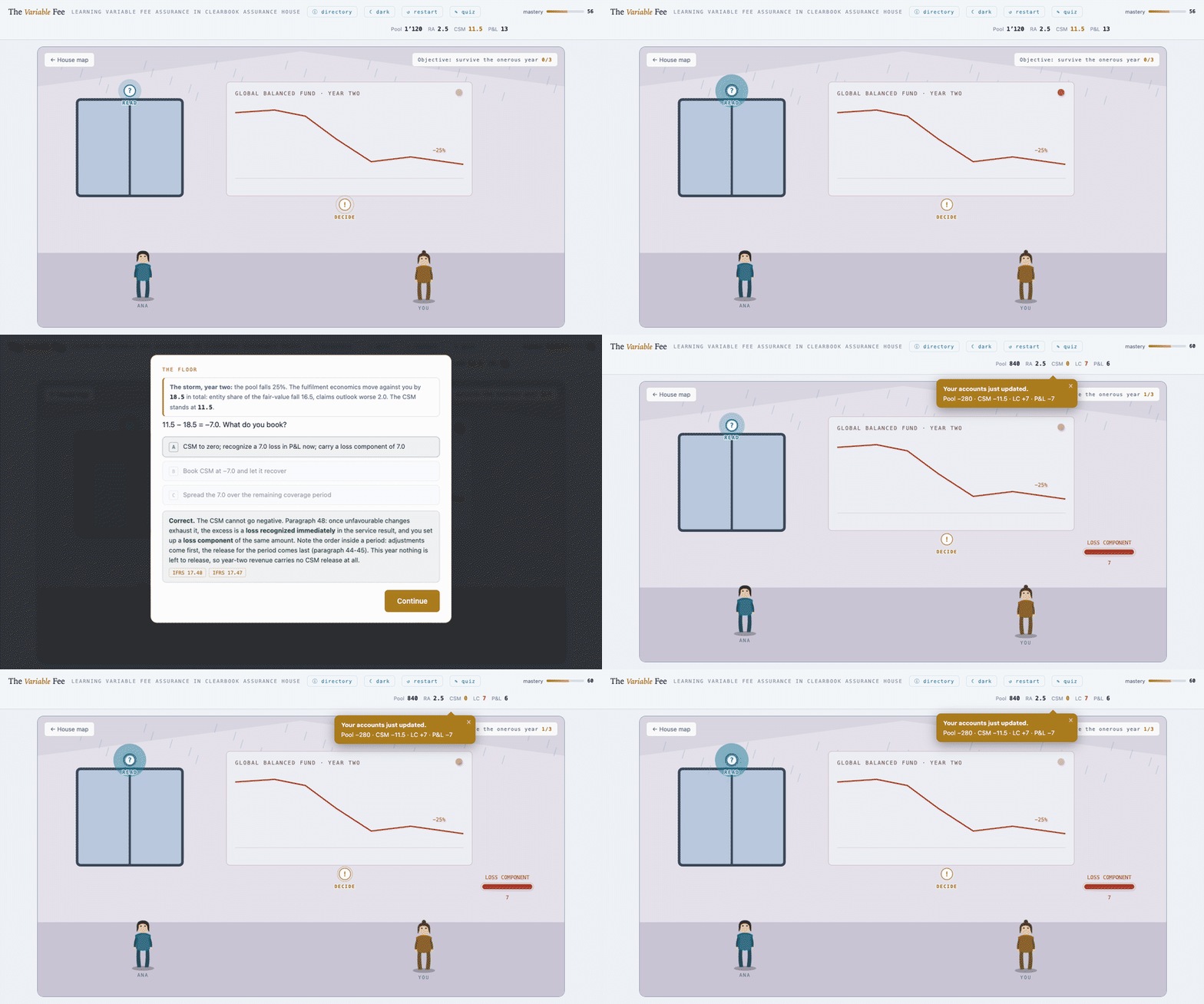
The player must decide where the 7.0 goes before seeing the answer. This turns a completed calculation into a judgment the learner has to make.
Naturally, not every adverse change under the VFA adjusts the CSM. The accounting depends on the nature of the change, whether it relates to future service and whether requirements such as the risk-mitigation exception apply. The game still needs to preserve those distinctions.
AI helped me move from an idea to a working prototype quickly. I used it to explore the structure, create interactions, write code and test different explanations.
The learning design still had to begin with the accounting. For each stage, I considered what the player should understand, what decision would reveal that understanding and what consequence should appear in the ledger.
That was the useful change for me. Instead of asking AI to explain VFA more simply, I was asking how to create an environment in which someone could reason through it.
A technical review revealed that the game could look convincing before its content was reliable.
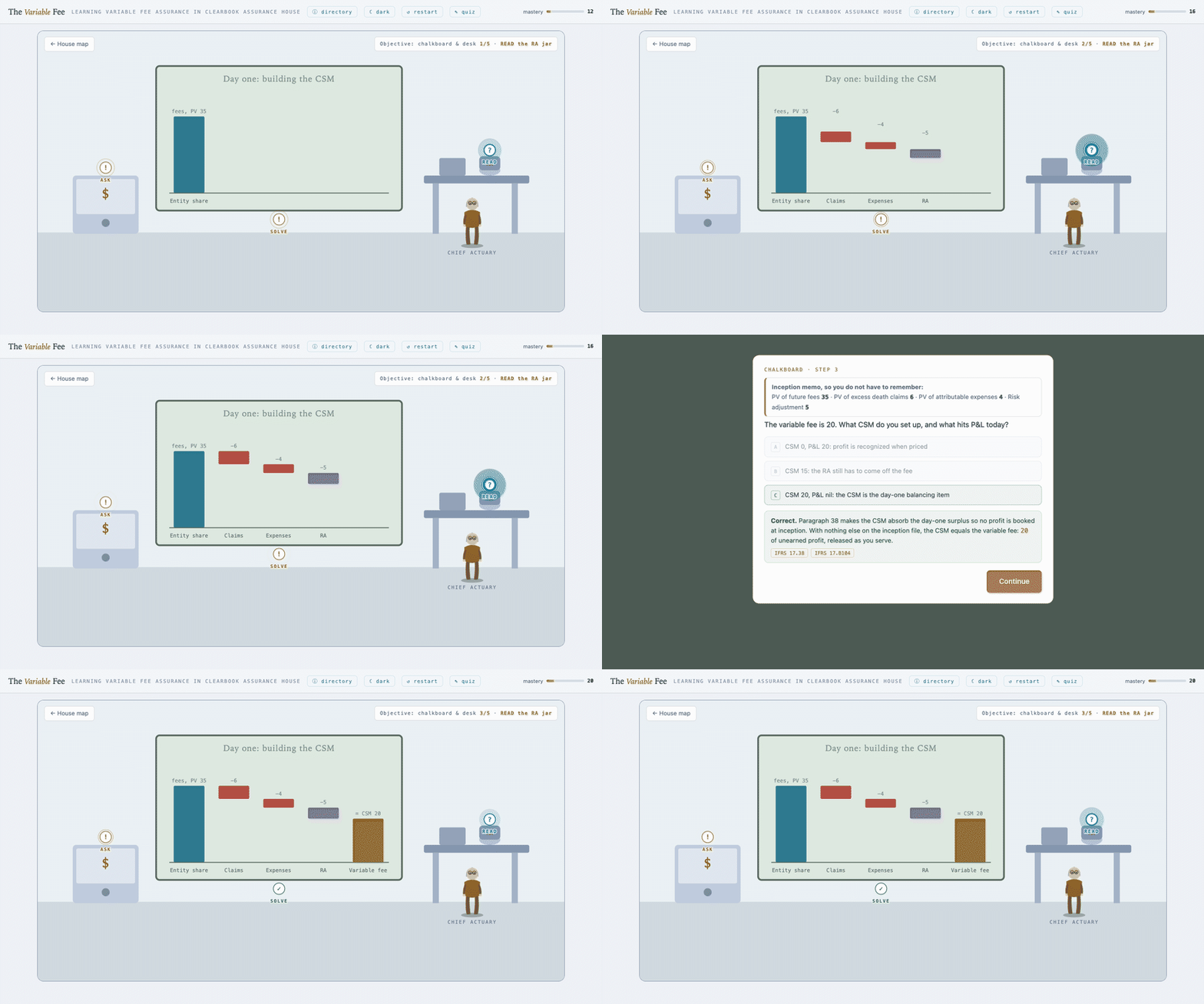
In one calculation, the final CSM happened to be correct, but the explanation reached it for the wrong accounting reason. Another scenario was inconsistent about the return on the underlying items and the amount attributed to the policyholder.
These were important errors. A broken feature makes the user suspicious, whereas a polished but incorrect explanation encourages the user to remember it.
I corrected the issues and tested the journey again. The experience reminded me that asking the same AI to review its own work is not independent verification. As with an IFRS 17 model, the content needs to be traced back to the requirements and the calculations tested separately.
AI made it easier to build a new way of learning the VFA, but it did not replace the expertise needed to decide what should be taught or to confirm that the accounting was correct.
That balance may be the most useful lesson from the experiment. AI can help experts turn documents into decisions and calculations into experiences, provided that responsibility for the knowledge remains with the expert.
You can play The Variable Fee here: adaptiveinc.github.io/the-variable-fee
It runs in the browser, on phones too, with nothing to install.
If you try it, I would like to know which part made the VFA easier to understand and where you were still confused.